Your cart
Your cart is empty
Continue shopping
Drawer menu
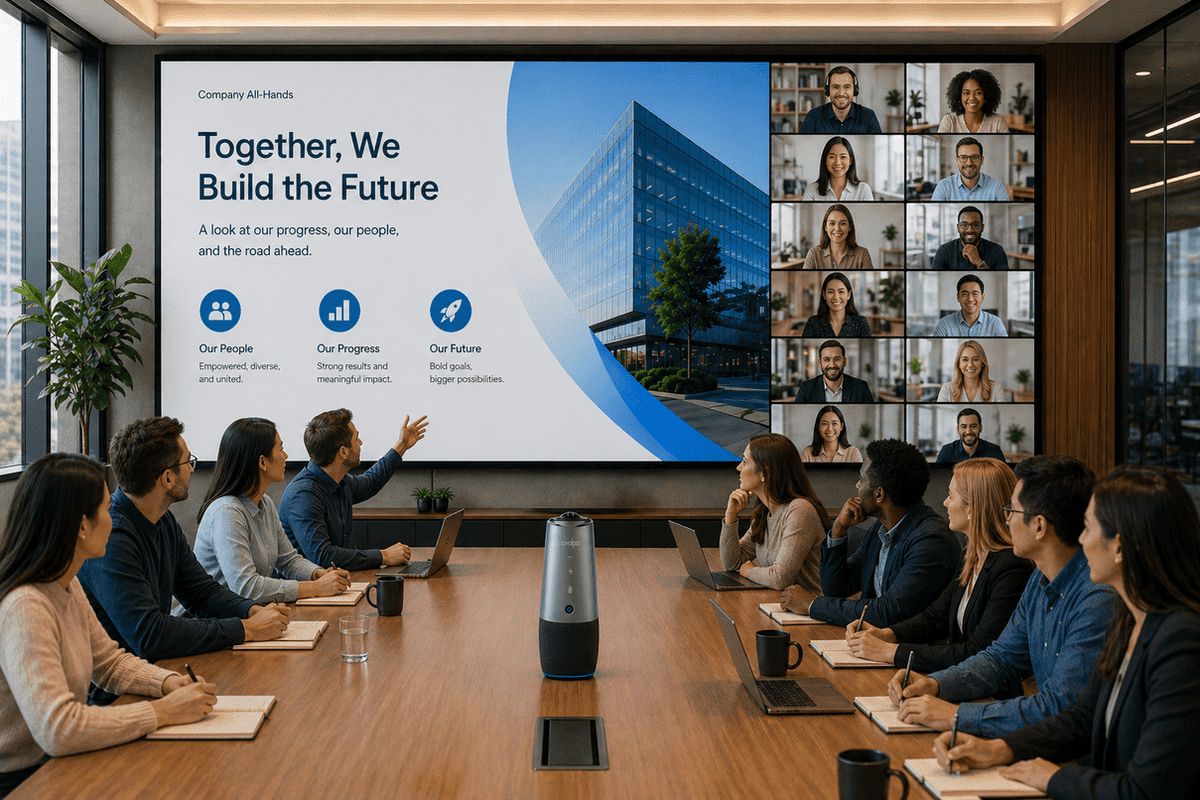
Getting a room or a screen full of employees aligned in one sitting is harder than it looks. Most all-hands meetings fail not from lack of effort, but from lack of structure.
To host successful all-hands meetings and company decks starts with using clear objectives, focused presentations, structured meeting flows, engaging communication, concise messaging, hybrid-friendly setups, balanced participation, clear ownership of actions, strong time management, and continuous improvement. These practices help organizations turn company-wide meetings into more aligned, productive, and actionable discussions instead of long presentations with unclear outcomes.
Below are detailed 10 ways to host successful all-hands meetings and company decks more effectively.
Every successful all-hands meeting should begin with a clearly defined purpose. Teams should immediately understand why the meeting is happening and what outcomes are expected.
A clear objective keeps discussions focused and prevents meetings from becoming unnecessary or unfocused.
A company deck should guide the meeting instead of overwhelming employees with excessive information.
Focused company decks improve clarity, retention, and overall communication flow during all-hands meetings.
Structured all-hands meetings are easier for employees to follow and help maintain engagement throughout the session.
A common all-hands meeting structure includes:
A consistent flow helps prevent scattered discussions and improves alignment across teams.
Successful all-hands meetings should encourage interaction instead of functioning as one-way presentations.
Engaging communication helps employees stay connected to company goals and improves overall participation.
More content does not always improve communication. Successful company decks focus on delivering clear and understandable information.
Clear communication improves information retention and prevents employees from feeling overloaded.

Modern all-hands meetings often involve both remote and in-person employees, making accessibility and communication quality important.
In hybrid meeting rooms, conference cameras like the Coolpo PANA can help improve room visibility and audio pickup so remote employees can follow discussions more clearly.
If you're evaluating hardware for your meeting room, learning how to choose the right smart 360-degree video conference cameras will save you for any unnecessary waste of time and money.
Strong all-hands meetings create opportunities for participation beyond leadership presentations.
Encouraging participation helps improve transparency, collaboration, and trust across the organization.
Successful all-hands meetings should lead to clear actions after discussions end.
Clear ownership helps ensure discussions translate into execution and accountability.
Time management is an important part of hosting successful all-hands meetings and company decks.
Shorter and more focused meetings help maintain employee attention and engagement.
The best all-hands meetings evolve over time based on employee feedback and organizational needs.
Continuous improvement helps organizations create more effective and relevant meetings long-term.
How to host successful all-hands meetings and company decks depends on clear structure, focused communication, and consistent execution. From defining objectives and building focused presentations to improving engagement, supporting hybrid accessibility, assigning ownership clearly, and refining the meeting format continuously, these practices help organizations create more productive and aligned company-wide meetings. When applied consistently, all-hands meetings become more than routine updates — they become an effective system for improving transparency, collaboration, and execution across the organization.


