Your cart
Your cart is empty
Continue shopping
Drawer menu
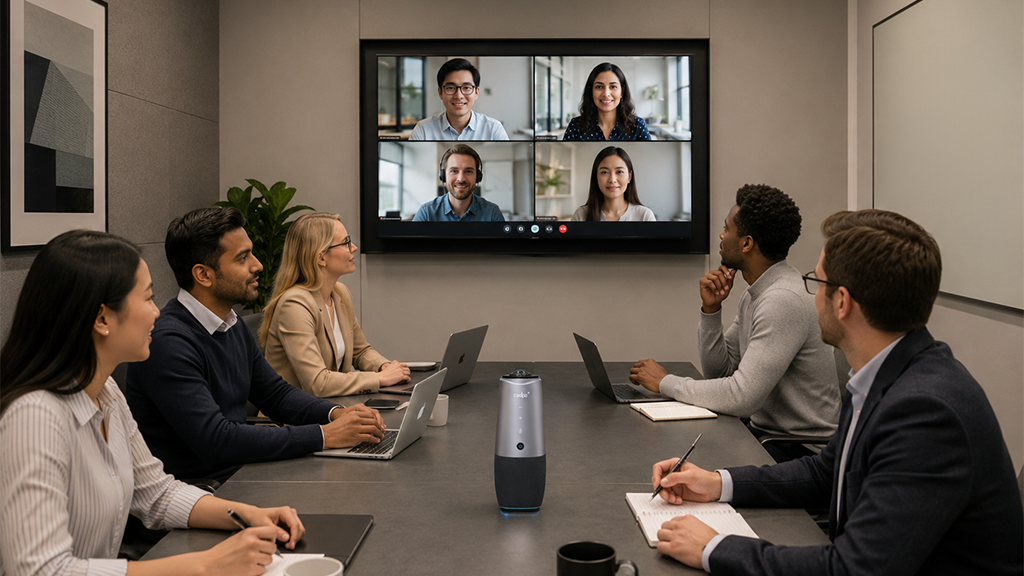
The main differences between in-person and virtual meetings involve communication style, flexibility, collaboration experience, accessibility, and technology requirements. In-person meetings support stronger face-to-face interaction and more natural collaboration, while virtual meetings improve flexibility, remote accessibility, and communication across different locations. Many modern businesses now combine both formats through hybrid meetings to balance collaboration and convenience.
Below, we break down how these meeting formats differ and where each works best.
One of the biggest differences between these meeting formats is how people communicate during discussions.
In-person collaboration often feels more personal, while virtual communication prioritizes accessibility and convenience.
Virtual meetings provide significantly more flexibility compared to traditional in-office discussions.
Businesses increasingly rely on virtual communication systems to connect employees, clients, and partners across different cities and countries.
Both meeting formats support collaboration differently depending on the communication goals.
Many businesses now combine digital collaboration platforms and structured workflows to improve participation during remote and hybrid discussions.
Operational costs are another major difference between physical and virtual meetings.
Virtual communication helps businesses save time and reduce operational expenses while improving accessibility.
Virtual and hybrid meetings rely heavily on communication technology and conferencing systems.
Modern collaboration environments also increasingly use:
For hybrid collaboration, solutions like the Coolpo AI Huddle PANA help improve communication through integrated 360° video, microphones, speakers, and AI-powered speaker tracking.
These technologies continue improving communication clarity, meeting visibility, and collaboration quality between remote and in-room participants.
Many businesses now combine physical and virtual collaboration through hybrid work environments.
Hybrid meetings allow:
This approach helps organizations balance:
Hybrid work has made this format increasingly common in modern business environments.
Many organizations now choose meeting formats based on communication goals, participant locations, and collaboration needs.
Both in-person and virtual meetings provide unique advantages depending on communication goals, collaboration needs, and workplace environments. Physical meetings often support stronger face-to-face interaction and engagement, while virtual collaboration improves flexibility, accessibility, and communication across locations. As hybrid work continues evolving, businesses increasingly combine both formats to create more adaptable and efficient collaboration environments.


