
10 Effective Team Meeting Strategies
Effective team meeting strategies include setting a clear meeting purpose, replacing unnecessary meetings with messages, creating structured agendas, keeping meetings short, inviting only relevant participants, opening meetings with direction, encouraging balanced participation, improving communication quality, pushing discussions toward decisions, assigning clear action items, and continuously improving how meetings are managed.
These strategies help teams create more focused, productive, and outcome-driven meetings in both remote and hybrid work environments. While platforms like Zoom and Microsoft Teams support communication, meetings can still become ineffective without proper structure, accountability, and follow-through.
Below are the10 effective team meeting strategies explained in detail.
1. Start with a Purpose That Actually Matters
One of the most effective team meeting strategies is defining a clear purpose before scheduling the meeting. Teams should understand whether the meeting is intended for decision-making, problem-solving, planning, or alignment.
- Are we making a decision?
- Solving a problem?
- Aligning on direction?
If none of these apply, the meeting may not need to happen. Clear objectives help teams avoid unnecessary discussions and improve productivity.
2. Replace Meetings When a Message Works Better
Effective team meeting strategies also involve recognizing when meetings are unnecessary. Many meetings are scheduled for updates that could easily be shared through chat, email, or project management tools.
- Share updates in chat or email
- Use dashboards for progress tracking
- Reserve meetings for discussions and decisions
If no collaboration or discussion is needed, scheduling a meeting often wastes time instead of improving efficiency.
3. Build a Real Agenda, Not Just a Topic List
Structured agendas are an important part of effective team meeting strategies because they keep conversations organized and focused.
- Break down discussion topics clearly
- Assign owners for each section
- Set time expectations for every topic
A detailed agenda helps prevent meetings from drifting into unrelated discussions and improves time management.
4. Keep the Meeting Tight, Not Long
Many effective team meeting strategies focus on reducing wasted time and maintaining attention throughout the discussion.
- Aim for 20–30 minutes
- Focus only on necessary discussions
- Remove topics that do not move decisions forward
Shorter meetings often lead to better engagement, sharper thinking, and faster decision-making.
5. Be Selective with Who Joins
ffective team meeting strategies prioritize intentional attendance instead of inviting everyone automatically.
- Include decision-makers
- Include people directly involved in execution
- Avoid unnecessary observers
Smaller meetings are usually easier to manage and more productive because discussions remain focused.
6. Open with Direction, Not Reports
Strong meetings begin with alignment instead of lengthy updates. Effective team meeting strategies often start by clarifying the meeting goal immediately.
- State the goal of the meeting
- Highlight important priorities
- Confirm what success looks like
Starting with direction helps participants focus on outcomes rather than passive reporting.
7. Make Participation Structured, Not Random
Balanced participation is another important part of effective team meeting strategies. Productive meetings should not depend only on the loudest voices in the room.
- Use round-robin sharing when needed
- Ask targeted questions
- Give quieter members opportunities to contribute
Structured participation improves collaboration, engagement, and idea quality during discussions.
When Structure Isn’t Enough
Even with strong agendas and participation systems, some meetings still struggle because communication quality becomes the main issue, especially in hybrid work environments.
This commonly appears as:
- People speaking over each other
- Remote participants missing parts of discussions
- Weak audio coverage in meeting rooms
- Poor or inconsistent video framing during conversations
Even with a strong agenda and structured participation, some team meetings still struggle—especially in hybrid setups—because communication quality becomes the limiting factor.
This usually shows up as:
- People speaking over each other or not being heard clearly
- Remote participants missing parts of the discussion
- Weak or uneven audio coverage in shared rooms
- Inconsistent video framing during group interactions
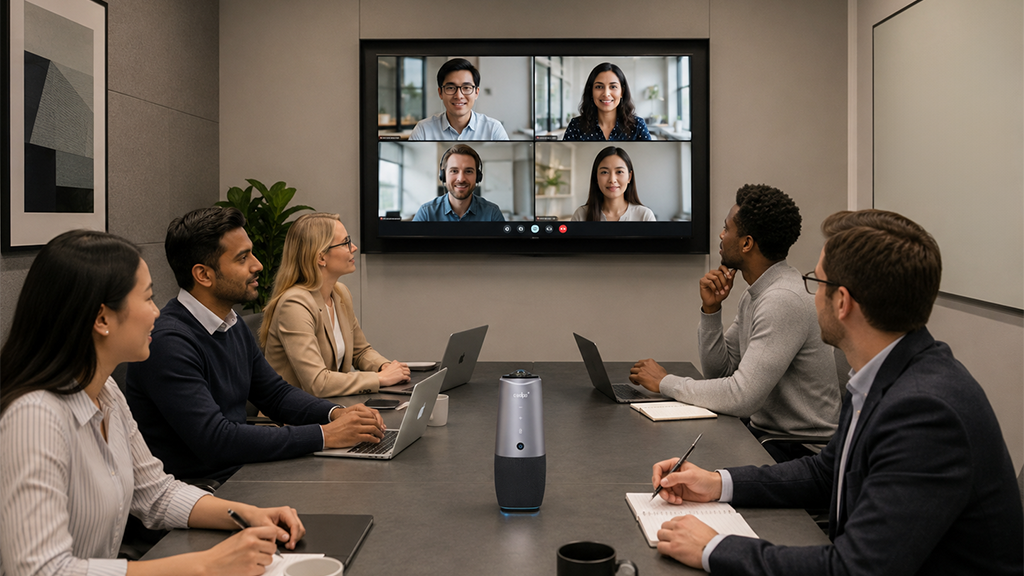
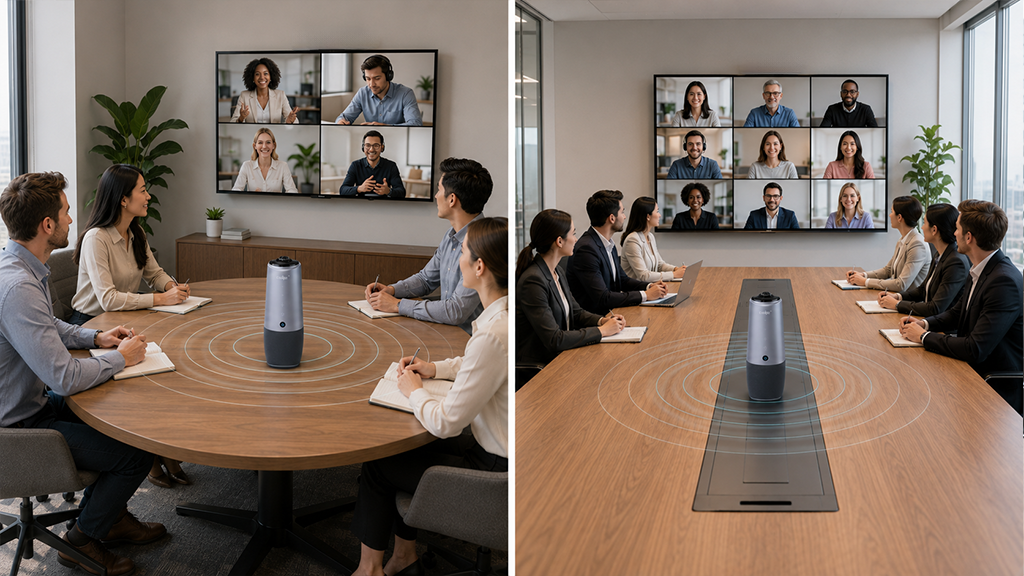
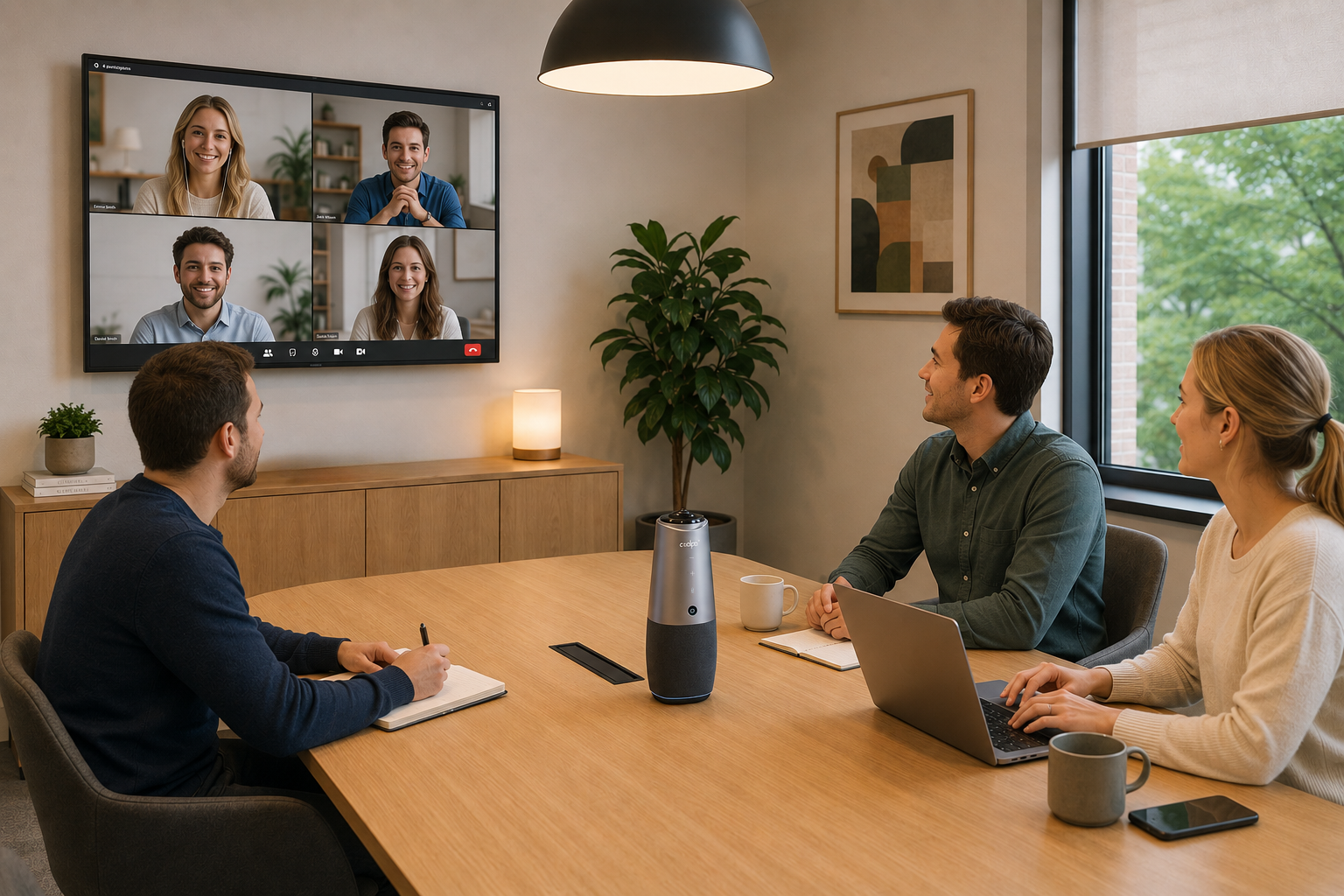
In these situations, the issue is no longer the meeting structure itself but the communication setup being used. All-in-one 360-degree conferencing cameras like the Coolpo PANA can help improve meeting visibility and audio coverage for hybrid teams.
8. Push Every Discussion Toward a Decision
One of the most effective team meeting strategies is ensuring every discussion leads toward a clear outcome.
- What needs to be decided?
- What direction are we agreeing on?
- What are the next steps?
Open-ended conversations often delay progress and create confusion after the meeting ends.
9. Turn Talk into Assignments Immediately
Effective team meeting strategies focus heavily on execution and accountability after discussions take place.
- Assign one clear owner per task
- Set deadlines during the meeting
- Document action items before ending
Without ownership and deadlines, meetings often result in discussions without meaningful progress.
10. Treat Meetings as Something to Improve
The best teams continuously refine how meetings are managed. Effective team meeting strategies should evolve based on what actually improves productivity and collaboration.
- What felt unnecessary?
- What improved decision-making?
- Should this meeting continue at all?
Regular evaluation helps teams remove ineffective habits and improve future meetings over time.
Conclusion
Effective team meeting strategies help teams create more focused, productive, and outcome-driven meetings. By setting clear objectives, reducing unnecessary meetings, using structured agendas, encouraging balanced participation, improving communication quality, assigning ownership clearly, and continuously refining the meeting process, teams can improve collaboration and reduce wasted time. Organizations that consistently apply effective team meeting strategies are more likely to achieve stronger accountability, faster decision-making, and more efficient communication in both remote and hybrid work environments.
Recent blogs


Reliable
Innovation
Touch


