
How to host successful All-Hands Meetings and Company Decks?
Successful all-hands meetings and company decks come down to ten practices: a clear objective, a focused deck, a consistent meeting flow, engaging (not one-way) communication, clarity over volume, hybrid-friendly setup, balanced participation, clear ownership of next steps, strict time management, and continuous improvement based on feedback.
Getting a room or a screen full of employees aligned in one sitting is harder than it looks. Most all-hands meetings fail not from lack of effort, but from lack of structure.
To host successful all-hands meetings and company decks starts with using clear objectives, focused presentations, structured meeting flows, engaging communication, concise messaging, hybrid-friendly setups, balanced participation, clear ownership of actions, strong time management, and continuous improvement. These practices help organizations turn company-wide meetings into more aligned, productive, and actionable discussions instead of long presentations with unclear outcomes.
Below are detailed 10 ways to host successful all-hands meetings and company decks more effectively.
1. Start with a Clear Objective
Every successful all-hands meeting should begin with a clearly defined purpose. Teams should immediately understand why the meeting is happening and what outcomes are expected.
- Align teams on company direction
- Share performance updates or priorities
- Address important company changes or challenges
A clear objective keeps discussions focused and prevents meetings from becoming unnecessary or unfocused.
2. Build a Focused Company Deck
A company deck should guide the meeting instead of overwhelming employees with excessive information.
- Use a simple and logical narrative structure
- Focus only on important messages
- Keep slides visual and easy to understand
- Present only company-wide relevant information
Focused company decks improve clarity, retention, and overall communication flow during all-hands meetings.
3. Follow a Clear Meeting Flow
Structured all-hands meetings are easier for employees to follow and help maintain engagement throughout the session.
A common all-hands meeting structure includes:
- Opening: meeting purpose and key message
- Updates: company performance and progress
- Direction: priorities and upcoming focus areas
- Culture: recognition and achievements
- Q&A: employee discussion and feedback
A consistent flow helps prevent scattered discussions and improves alignment across teams.
4. Keep Communication Engaging
Successful all-hands meetings should encourage interaction instead of functioning as one-way presentations.
- Include live or pre-submitted questions
- Encourage input from multiple departments
- Highlight achievements across teams
Engaging communication helps employees stay connected to company goals and improves overall participation.
5. Focus on Clarity Over Volume
More content does not always improve communication. Successful company decks focus on delivering clear and understandable information.
- Highlight only essential information
- Avoid deep technical breakdowns
- Keep messaging concise and direct
Clear communication improves information retention and prevents employees from feeling overloaded.
6. Design for Hybrid Accessibility

Modern all-hands meetings often involve both remote and in-person employees, making accessibility and communication quality important.
- Ensure stable video and clear audio using platforms like Zoom or Google Meet
- Make slides readable across all devices
- Record meetings for asynchronous viewing
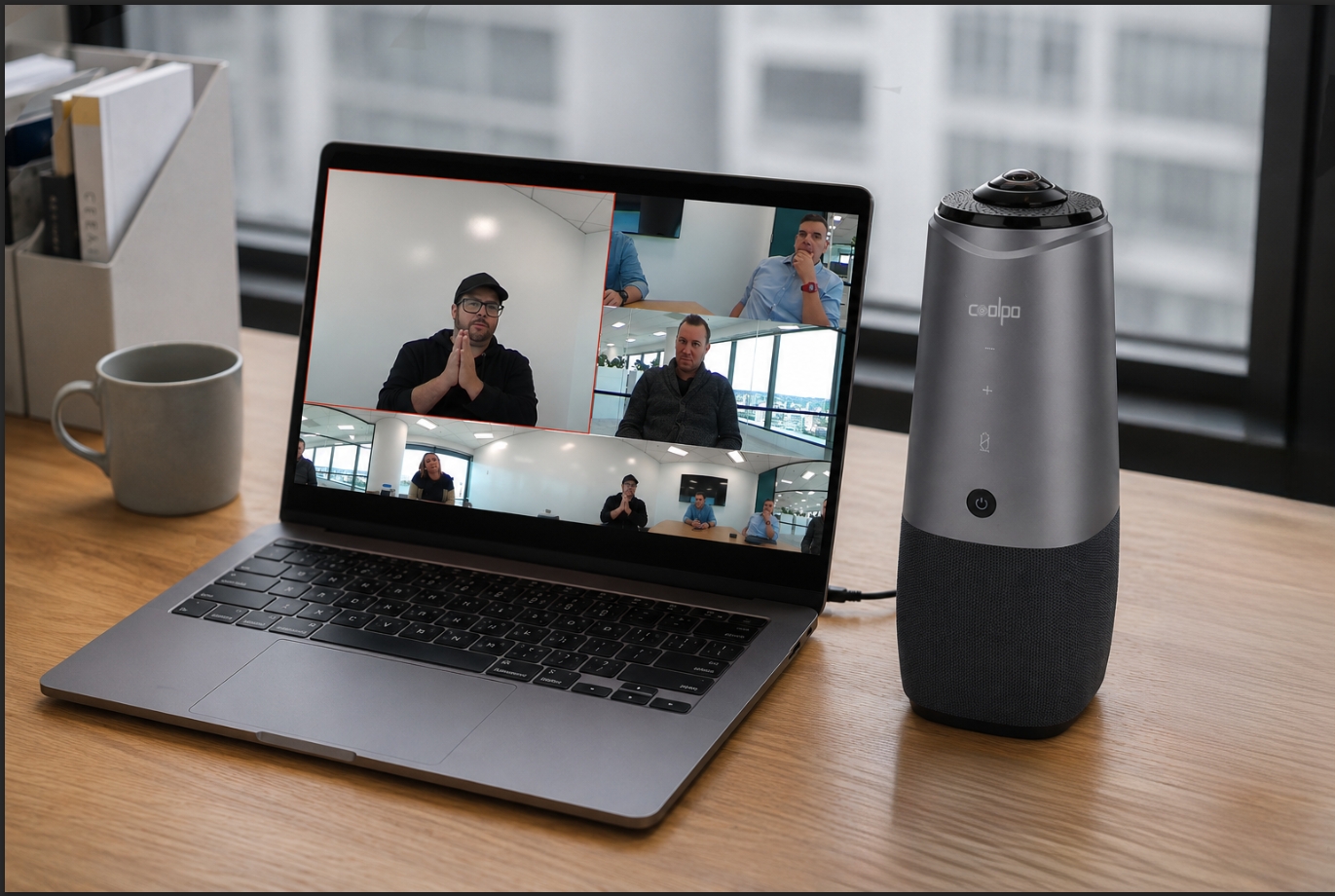
In hybrid meeting rooms, conference cameras like the Coolpo PANA can help improve room visibility and audio pickup so remote employees can follow discussions more clearly.
If you're evaluating hardware for your meeting room, learning how to choose the right smart 360-degree video conference cameras will save you for any unnecessary waste of time and money.
7. Encourage Participation from All Levels
Strong all-hands meetings create opportunities for participation beyond leadership presentations.
- Open space for employee questions
- Gather feedback during the session
- Highlight contributions from different departments
Encouraging participation helps improve transparency, collaboration, and trust across the organization.
8. Assign Ownership of Next Steps
Successful all-hands meetings should lead to clear actions after discussions end.
- Summarize key decisions clearly
- Assign responsibilities to specific teams or individuals
- Set deadlines when necessary
Clear ownership helps ensure discussions translate into execution and accountability.
9. Keep Meetings Time-Bound
Time management is an important part of hosting successful all-hands meetings and company decks.
- Stay within the scheduled meeting duration
- Avoid unnecessary deep discussions
- Move highly detailed topics outside the main session
Shorter and more focused meetings help maintain employee attention and engagement.
10. Continuously Improve the Format
The best all-hands meetings evolve over time based on employee feedback and organizational needs.
- Collect feedback after each session
- Adjust deck structure when necessary
- Remove sections that no longer add value
Continuous improvement helps organizations create more effective and relevant meetings long-term.
Conclusion
How to host successful all-hands meetings and company decks depends on clear structure, focused communication, and consistent execution. From defining objectives and building focused presentations to improving engagement, supporting hybrid accessibility, assigning ownership clearly, and refining the meeting format continuously, these practices help organizations create more productive and aligned company-wide meetings. When applied consistently, all-hands meetings become more than routine updates — they become an effective system for improving transparency, collaboration, and execution across the organization.
1. How often should a company hold all-hands meetings?
Monthly is the most common cadence, though frequency should scale with company size and rate of change — fast-moving or smaller teams sometimes go weekly, while larger, more stable organizations may go quarterly.
2. How long should an all-hands meeting last?
Most run 45–60 minutes. Remote attendees in particular lose focus past the hour mark, so detailed or department-specific discussions are better moved to separate follow-up sessions.
3. What should be included in a company deck for an all-hands meeting?
A focused narrative covering company updates, performance highlights, priorities, and recognition — kept visual and concise rather than data-dense, since the deck should guide the conversation, not replace it.
4. How do you keep a hybrid all-hands meeting engaging for remote employees?
Reliable video and audio quality, readable slides across devices, and recorded sessions for async viewing all help. Conference room cameras that improve visibility and audio pickup — like 360-degree systems — close the gap between in-room and remote participants.
5. What's the biggest mistake companies make in all-hands meetings?
Turning them into one-way presentations. Meetings that leave no room for questions, feedback, or cross-department input tend to lose engagement over time, even with strong content.
Recent blogs


%20(3).jpg)
.png)

Reliable
Innovation
Touch


